General Education at WNMU
General Education
Purpose of General Education
General education is the foundation for all WNMU students and for the College of Arts and Sciences, as its intention is to instill an understanding and appreciation of the applied liberal arts and sciences.
General education is a designated set of courses designed to equip all New Mexico students who complete an undergraduate degree with adequate literacy, general knowledge, and essential skills to function productively in employment, pursue advanced education, and participate in the cultural and political life of the community. Undergraduate certificate programs include a combination of general education knowledge and practical learning experiences within particular disciplines.
Using an applied liberal arts framework, we encourage students to master essential competencies while applying them to their own experiences using intellectual inquiry to answer to four questions: What is truth? What is justice? What does it mean to be human? and What is the good life?
Within the New Mexico General Education program, WNMU requires Applied Liberal Arts and Sciences (ALAS) designated courses for its “Flexible 9 credits” (for A.A. and A.S. degree plans) and “Flexible 3 credits” (for A.A.S. degree plans). These “distinctive identity” credit hours of the Applied Liberal Arts and Sciences (ALAS) serve as the foundation courses for General Education.
Applied Liberal Arts and Sciences
WNMU’s ALAS Program
Within the New Mexico General Education program, WNMU requires Applied Liberal Arts and Sciences (ALAS) designated courses for its “Flexible 9 credits” (for A.A. and A.S. degree plans) and “Flexible 3 credits” (for A.A.S. degree plans). These “distinctive identity” credit hours of the Applied Liberal Arts and Sciences (ALAS) serve as the foundation courses for General Education as well as our General Education Program Assessment.
Click here for more information about our unique ALAS program.
General Education Curriculum
WNMU’s General Education program aligns with and has been approved by the New Mexico Higher Education Department (NMHED).
All courses meet General Education standards both for the “Area” of study as well as the required “Essential Skills” outlined in the General Education Student Learning Outcomes section below.
| Area I: Communication (6 hours required) |
| Students must complete ENGL 1120 and may choose one of the following COMM courses: |
| COMM 1130 – Public Speaking (3 hours) |
| COMM 1140 – Introduction to Media Writing (3 hours) |
| COMM 2140 – Small Group Communication (3 hours) |
| Area II: Mathematics (3-5 hours required) |
| MATH 1010 – Math for School Teachers (3 hours) |
| MATH 1130 – Survey of Mathematics (3 hours) |
| MATH 1220 – College Algebra (4 hours) |
| MATH 1350 – Introduction to Statistics (3 hours) |
| MATH 1510 – Calculus (5 hours) |
| Area III: Laboratory Science (4 hours required) |
| BIOL 1110 – Biology for Diversity of Life (3 hours) |
| BIOL 1110L – Biology for Diversity of Life Lab (1 hour) |
| BIOL 1140 – Biology for Health Sciences (3 hours) |
| BIOL 1140L – Biology for Health Sciences Lab (1 hour) |
| BIOL 2110 – Principles of Biology: Cellular and Molecular Biology (3 hours) |
| BIOL 2110 L – Principles of Biology: Cellular and Molecular Biology Lab (1 hour) |
| BIOL 2210 – Human Anatomy and Physiology (3 hours) |
| BIOL 2210L – Human Anatomy and Physiology Lab (1 hour) |
| BIOL 2642 – Plant Form, Function, and Diversity (3 hours) |
| BIOL 2642L – Plan Form, Function, and Diversity Lab (1 hour) |
| CHEM 1120 – Introduction to Chemistry (non-majors) (3 hours) |
| CHEM 1120L – Introduction to Chemistry (non-majors) lab (1 hour) |
| CHEM 1215 – General Chemistry (for STEM majors) (3 hours) |
| CHEM 1215L – General Chemistry (for STEM majors) Lab (1 hour) |
| GEOL 1110 – Physical Geology (3 hours) |
| GEOL 1110L – Physical Geology Lab (1 hour) |
| GEOL 1120 – Environmental Geology (3 hours) |
| GEOL 1120L – Environmental Geology Lab (1 hour) |
| GEOL 2130 – Introduction to Meteorology (3 hours) |
| GEOL 2130L – Introduction to Meteorology Lab (1 hour) |
| PHSC 1120 – Forensic Science (3 hours) |
| PHSC 1120L – Forensic Science Lab (1 hour) |
| Area IV: Social and Behavioral Sciences (3 hours required) |
| ANTH 1140 – Introduction to Cultural Anthropology (3 hours) |
| ECON 1110 – Survey of Economics (3 hours) |
| ECON 2110 – Macroeconomic Principles (3 hours) |
| ECON 2120 – Microeconomic Principles (3 hours) |
| GEOG 1120 – World Regional Geography (3 hours) |
| GEOG 1130 – Human Geography (3 hours) |
| POLS 1110 – Introduction to Political Science (3 hours) |
| POLS 1120 – American National Government (3 hours) |
| PSYC 1110 – Introduction to Psychology (3 hours) |
| SOCI 1110 – Introduction to Sociology (3 hours) |
| SOCI 2310 – Contemporary Social Problems (3 hours) |
| SOWK 2110 – Introduction to Human Services and Social Work (3 hours) |
| Area V: Humanities (3 hours required) |
| ENGL 1410 – Introduction to Literature (3 hours) |
| ENGL 2310 – Introduction to Creative Writing (3 hours) |
| HIST 1110 – United States History I (3 hours) |
| HIST 1120 – United States History II (3 hours) |
| HIST 1150 – Western Civilization I (3 hours) |
| HIST 1160 – Western Civilization II (3 hours) |
| PHIL 1115 – Introduction to Philosophy (3 hours) |
| PHIL 2117 – Ethics and Sustainability (3 hours) |
| Area VI: Creative & Fine Arts (3-4 hours required) | |||
| ARTS 1240 – Design I (4 hours) | |||
| ARTS 1250 – Design II (4 hours) | |||
| ARTS 1410 – Introduction to Photography (4 hours) | |||
| ARTS 1610 – Drawing I (4 hours) | |||
| ARTS 1630 – Painting I (4 hours) | |||
| ARTS 2321 – Appreciation of Clay (4 hours) | |||
ARTS 2841 – Appreciation of Sculpture (4 hours)
|
| Applied Liberal Arts and Sciences (9 hours required) |
| *As indicated above, students enrolled in the A.A.S. programs are required to select only one of the ALAS courses. |
| ALAS 1810 – Humanities (3 hours) |
| ALAS 1820 – Social and Behavioral Sciences (3 hours) |
| ALAS 1825 – Career Exploration and Financial Independence (3 hours) |
| ALAS 1830 – STEM (3 hours) |
| ALAS 1835 – Creative & Fine Arts |
| ALAS 1993– Ethnic Studies (proposed; C&I and HED approval pending) |
General Education Student Learning Outcomes (SLOs)
WNMU’s Student Learning Outcomes (SLOs) are based on New Mexico’s required “Essential Skills” for the General Education curriculum: Communication, Critical Thinking, Information and Digital Literacy, Quantitative Reasoning, and Personal and Social Responsibility. New Mexico’s Essential Skills are aligned with the American Association of Colleges and Universities’ “VALUE: Authentic Evidence of Student Learning” Initiative and are intended to ensure that students are learning transferable skills in their college experience.
These Student Learning Outcomes (SLOs) are assessed in our General Education Assessment, which is an annual report evaluated by our university’s Assessment Committee. Our assessment rubrics have been adapted from the American Association of Colleges and Universities’ “VALUE: Authentic Evidence of Student Learning” rubrics.
By the end of their general education program, students should exhibit theoretical understanding of the concepts of audience, purpose, context, and genre and be able to apply this knowledge in responding to a diverse range of audiences, purposes, and contexts with appropriate texts and performances in various media.
| Communication Component Skills | |
|---|---|
| Genre and Medium Awareness, Application, and Versatility | Identify and communicate in various genres and mediums (oral, written, and digital) using strategies appropriate for the rhetorical situations (i.e., attending to audience, purpose, and context). |
| Strategies for Understanding and Evaluating Messages | Apply strategies such as reading for main points; seeking key arguments, counterarguments, rebuttals; locating supportive documentation for arguments; reading with a specific stakeholder lens; applying a theoretical lens (e.g. cultural, political, economic) to understand and evaluate messages in terms of the rhetorical situation (audience, purpose, and context). |
| Evaluation and Production of Arguments | Evaluate the authority of sources in their own arguments and those of others; distinguish among supported claims, unsupported claims, facts, inferences, and opinions. In arguments, integrate support for their own claims with information from sources that are used and cited ethically and appropriately (using a major citation system such as MLA and APA). |
By the end of their general education program, students should utilize the four steps of critical thinking—problem identification, evidence acquisition, evidence analysis, and drawing evidence-based conclusions—and apply them across disciplines.
| Critical Thinking Component Skills | |
|---|---|
| Problem Setting | Delineate a problem or question. Students state problems/questions appropriate to the context. |
| Evidence Acquisition | Identify and gather the information/data necessary to address the problem or question. |
| Evidence Evaluation | Evaluate evidence/data for credibility (e.g. bias, reliability, and validity), probable truth, and relevance to a situation. |
| Reasoning/Conclusion | Develop conclusions, solutions, and outcomes that reflect an informed, well-reasoned evaluation. |
By the end of their general education program, students should critically consider information formats and digital environments/platforms, recognize the authority and value of information, and engage in research as inquiry.
| Information and Digital Literacy – Address 3 of the 4 Component Skills | |
|---|---|
| Authority and Value of Information | Recognize the interdependent nature of the authority and value of information and use this knowledge ethically when selecting, using, and creating information. |
| Digital Literacy | Understand, communicate, compute, create, and design in digital environments. |
| Information Structures | Select, use, produce, organize, and share information employing appropriate information formats, collections, systems, and applications. |
| Research as Inquiry | Engage in an iterative process of inquiry that defines a problem or poses a question and through research generates a reasonable solution or answer. |
By the end of their general education program, students should represent and communicate quantitative information, analyze and formulate their own quantitative arguments, and solve quantitative contextual word problems.
| Quantitative Reasoning Component Skills | |
|---|---|
| Communication/Representation of Quantitative Information | Express quantitative information symbolically, graphically, and in written or oral language. |
| Analysis of Quantitative Arguments | Interpret, analyze and critique information or a line of reasoning presented by others. |
| Application of Quantitative Models | Apply appropriate quantitative models to real world or other contextual problems. |
By the end of their general education program, students should collaborate and engage in civic discourse with others and critically reflect on global, social, political, ethical, and cultural issues.
| Personal and Social Responsibility Component Skills – (choose 2 of 5 ) | |
|---|---|
| Intercultural reasoning and intercultural competence | Explain a range of personal, social, cultural, or social justice issues as they relate to one’s own or others’ perspectives. |
| Sustainability and the natural and human worlds | Examine the relationship among environmental, socio-cultural, political, and economic systems as they interact with and affect the sustainability of the natural and human worlds. |
| Ethical Reasoning | Describe shared ethical responsibilities or moral norms among members of a group. Explain ethical issues or propose solutions based on ethical perspectives or theories. |
| Collaboration skills, teamwork and value systems | Demonstrate effective and ethical collaboration in support of meeting identified group goals. (Accountability is implied with “ethical.”) |
| Civic discourse, civic knowledge and engagement – local and global | Explain and support one’s own position on specific local or global issues while recognizing that there may be multiple valid perspectives. |
General Education Assessment
WNMU is committed to student success, a core value of the institution. In accordance with the Mission of the university, students should graduate having developed essential skills and knowledge for lifelong success”. These essential tools, per the university’s statement of core values, are foundational to life as productive “citizens who can think critically about, adapt to, and change the world around them.” In order to honor the central commitments of the university, we must verify that students are graduating with proficient essential skills core to productive citizenship as also mandated by the NMHED and HLC. Moreover, the current WNMU Strategic Plan calls for continuous evaluation of the ALAS program, including clear articulation of the purpose of ALAS, possibilities for further development, and assessment of the program’s effectiveness. A strong general education assessment program is, therefore, a necessary step toward demonstrating that WNMU is fulfilling an important role In New Mexico and beyond. Excellence in education can only be accomplished by diligent development and vigorous assessment of student academic achievement that serves to improve learning, teaching, strategic planning, and overall institutional effectiveness.
Since all WNMU General Education students are required to take a number of ALAS classes, the General Education Committee chose to utilize the ALAS Program for General Education assessment.
Essential skills in every ALAS course section must be assessed every semester the course is taught. Data is compiled and reports are generated based on the courses assessed each semester. A comprehensive report is produced at the end of each academic year in order to assess aggregate trends regarding student performance from year to year, starting with the benchmark AY 2024-2025. The purpose of assessment is to analyze student learning at a granular level that then informs decisions about continuous improvement, structurally and programmatically, from one year to the next.
See the attached Assessment Manual for information about WNMU’s General Education program and assessment: Gen-Ed-Assessment-Manual-FINAL 2026
Contact Us
We’d love to hear from you! Whether you have a question, need assistance, or just want to say hello, our team is here to help. Reach out using the information here and we’ll get back to you as soon as possible.
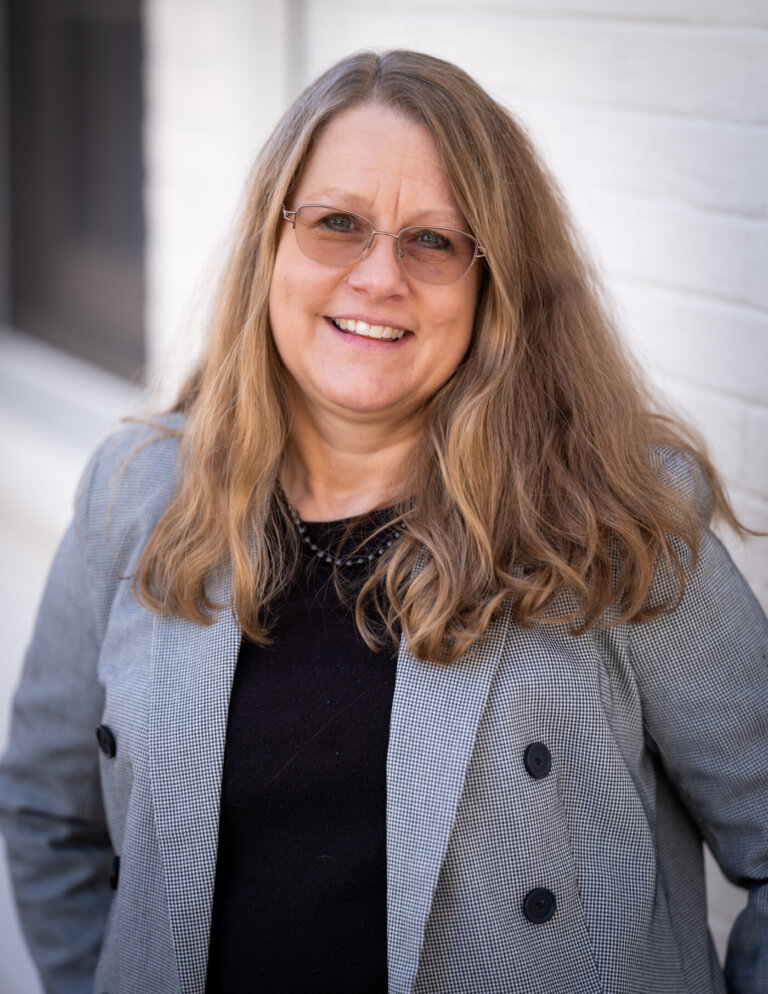
Dr. Katherine Oubre